Comfy Is Now an Official Reseller of MiniMax H3 Commercial Licenses
news-coverage
Comfy Is Now an Official Reseller of MiniMax H3 Commercial Licenses
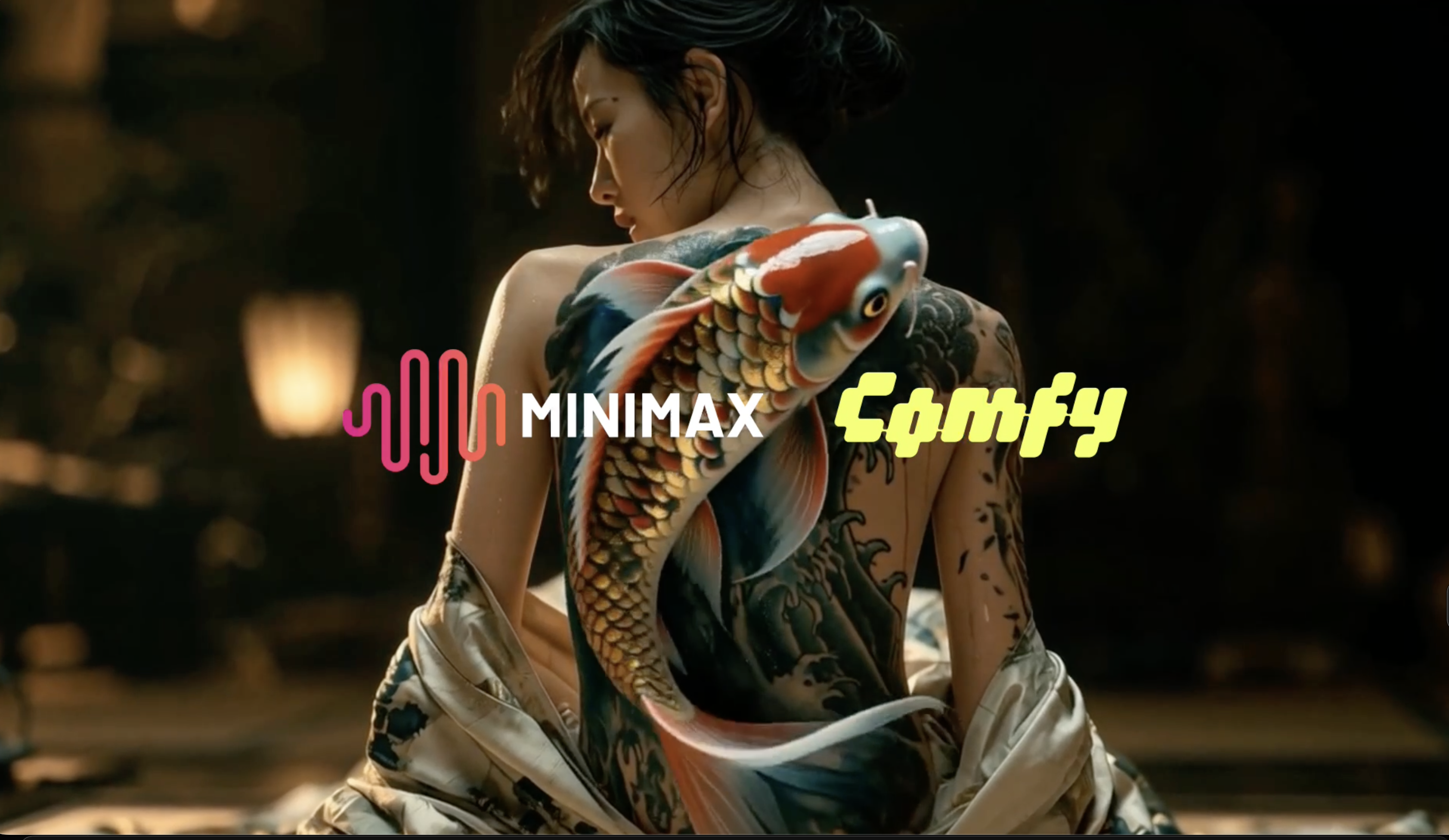
MiniMax H3 Commercial License via ComfyUI: What Creators Need to Know
The AI video generation landscape is shifting rapidly, and few announcements have generated as much practical excitement as ComfyUI becoming an official reseller for the MiniMax H3 commercial license. For developers, digital artists, and production teams who have been waiting for a legally clean path to use MiniMax H3 inside ComfyUI, this is more than a convenience—it’s a signal that AI video generation is maturing into a professional tool. In this deep-dive, we’ll unpack what the MiniMax H3 commercial license actually covers, how the ComfyUI integration changes everyday video workflows, and what you need to know before you start generating commercial content.
The short version: this partnership removes a lot of the legal ambiguity that has surrounded AI-generated video. Instead of hunting through third-party resellers or relying on personal-use terms, you can now purchase a MiniMax H3 commercial license directly through ComfyUI, the node-based visual programming tool already beloved by the AI art community. That means a smoother path from experimentation to production, and far fewer sleepless nights about rights management.
1. Understanding the MiniMax H3 Commercial License
What “Official Reseller” Status Means for ComfyUI

When a platform like ComfyUI becomes an official reseller for a model license, it isn’t just a marketing badge. It means ComfyUI has entered into a formal agreement with MiniMax, the company behind the H3 video model, to sell commercial usage rights to end users. For anyone who has been following the AI industry, this is a meaningful step forward because it establishes a traceable, authorized chain of distribution. You no longer have to wonder whether the key you bought from a random forum actually grants you the rights you think it does.
For ComfyUI users, this announcement also matters because the tool has historically been a free, open-source interface for running models from various providers. That openness is great for tinkering, but it has also created gray areas when those models are used for paid client work. By serving as an official reseller for the MiniMax H3 commercial license, ComfyUI gives its user base a trusted, direct distribution point. This is a big win for the broader AI video generation community because it sets a precedent that commercial creators can get proper licensing without leaving their favorite environment.
Key Terms of the MiniMax H3 Commercial License

While every license agreement has its nuances, the MiniMax H3 commercial license through ComfyUI generally includes several components you should know about before clicking “buy.”
First, commercial usage rights are the core of the license. This means you can use the model’s output in projects that generate revenue—client work, advertisements, films, games, or any other for-profit venture. Without a commercial license, those same outputs are typically restricted to personal experimentation or research.
Second, the project scope defines how broadly those rights apply. In many commercial licenses, the rights extend to the individual or entity that purchased the license. If you’re a freelancer, that typically means your own projects. If you run a studio, you’ll want to confirm whether the license covers multiple employees or requires seats per user.
Third, output ownership is usually explicit in commercial agreements. The licensing model clarifies that the content you generate—the actual video frames, the rendered clips—belongs to you, provided you comply with the license terms. This is critical when delivering works for hire or when you need to assign copyright to a client.
Finally, model access refers to how you retrieve and run the model. With ComfyUI as a reseller, this often translates into streamlined integration: your license key validates against ComfyUI’s infrastructure, and the model becomes available directly within your existing workflow.
How This Licensing Model Differs from Personal Use

Personal and research licenses are common in the AI space, but they’re not designed for commercial production. Under a personal-use agreement, you might be free to generate videos for your portfolio, for academic research, or for non-monetized social media posts. But if a client pays you to create a product demo, or if a brand uses your generated clip in an ad campaign, you’ve likely crossed into commercial territory.
The MiniMax H3 commercial license covers that gap. It gives freelancers, studios, and brands the legal safety to use the model for client-facing work. In practice, this means you can send that invoice without wading through a legal gray area. For anyone who has spent years working with stock footage licenses and talent releases, the clarity alone is worth the price. The difference is not just about permission—it’s about professional credibility. Clients are becoming more sophisticated about AI rights, and showing them that your toolchain is properly licensed is a competitive advantage.
2. ComfyUI MiniMax H3: What This Integration Changes for Video Workflows
ComfyUI MiniMax H3 Integration Points
If you’ve ever built a workflow in ComfyUI, you know the joy of connecting little nodes to form a visual pipeline. The MiniMax H3 integration fits squarely into that paradigm. You’ll find model loader nodes, prompt encoders, sampler nodes, and video output nodes that all speak the same visual language. This immediately reduces the number of third-party steps you need to produce AI video.
Before this integration, generating MiniMax H3 video often meant switching between separate web interfaces, command-line tools, or custom scripts. Now, the core steps—loading the model, writing your prompt, adjusting generation parameters, and rendering frames—happen inside a single, familiar canvas. For developers, this also opens the door to automation. You can build complex graphs that generate video, post-process frames, and even feed results into other AI tools without leaving ComfyUI.
The integration also simplifies license validation. Instead of manually entering keys into an obscure configuration file, the commercial license becomes part of your ComfyUI setup. The system checks your entitlement, and if something is wrong, you get a clear error instead of a silent failure mid-render.
Why Official Reseller Status Removes Friction

Anyone who has tried to license AI models has run into the same frustrations: confusing websites, unauthorized resellers offering gray-market keys, and vague terms that leave you wondering if you’re covered. This friction is more than an inconvenience—it’s a risk to your business. If you produce a campaign with a model you thought you had rights to, and it turns out the reseller was not authorized, you could face legal trouble.
ComfyUI’s official reseller status eliminates that friction because there is a direct, contractual relationship between ComfyUI and MiniMax. You aren’t depending on an unknown intermediary; you’re buying directly from a company that has already done the legal diligence. For commercial teams, that builds confidence. It also provides a clearer support path: if your license fails to activate, or if you have questions about permitted usage, you have an official channel to ask.
Who Should Care About the MiniMax H3 Commercial License

The answer is broader than you might think. Independent filmmakers are an obvious audience because they need affordable, high-quality visual effects and pre-visualization. AI artists who sell prints or animations can now do so without worrying about violating terms. Marketing teams at agencies can use MiniMax H3 to spin up quick video concepts for pitches, and game developers can generate cinematics or environment flythroughs.
Video production agencies, in particular, stand to benefit. When a client asks for stylized b-roll or an abstract transition sequence, licensing matters. With a commercial license, you can confidently deliver those assets as part of your professional service. In all these scenarios, the license transforms a fun toy into a dependable business tool.
3. AI Video Generation with ComfyUI: Where MiniMax H3 Fits
Understanding ComfyUI Video Models and Their Capabilities
The ComfyUI ecosystem now hosts a wide range of video generation models. Some are based on latent diffusion architectures, others leverage transformer-based approaches, and a few combine multiple techniques. Each model has its own strengths—some excel at short animated loops, while others can produce longer, more coherent sequences.
What makes ComfyUI particularly powerful is its ability to mix and match these models within a single workflow. You might use one model for a base clip, then run that clip through a different model for frame interpolation or style transfer. This modularity has made ComfyUI the go-to environment for developers who want more control than a one-click web app can provide.
MiniMax H3 vs. Other ComfyUI Video Models
So where does MiniMax H3 sit in this crowded field? In our testing, MiniMax H3 stands out for its balance of prompt adherence and motion consistency. It tends to follow descriptive prompts with surprising fidelity, which makes it easier to get the shot you actually want.
Compared to other video models available in ComfyUI, MiniMax H3 often produces smoother motion across longer sequences. Some models generate excellent single shots but struggle with maintaining a subject’s appearance over time. MiniMax H3 does a better job of keeping faces, clothing, and objects stable across frames, which is crucial for narrative work.
That said, it may not always be the fastest option. Depending on your hardware, other models can render quicker, albeit with less control. For commercial work where quality and consistency matter more than raw speed, MiniMax H3 is a strong contender. But it’s worth running side-by-side comparisons on your own prompts before choosing a model for a specific project.
Use Cases for AI Video Generation in ComfyUI
AI video generation in ComfyUI is not just a gimmick. Realistic applications include product demos. Instead of setting up a physical camera rig, you can prompt MiniMax H3 to generate a virtual product spin that looks surprisingly lifelike. Cinematic pre-visualization is another powerful use case. Directors and storyboard artists can produce moving storyboards to communicate mood and camera movement before spending money on a live shoot.
Social media content is another sweet spot. Short, eye-catching clips for Instagram Reels or TikTok can be generated in a fraction of the time it takes to shoot and edit. And for short-form storytelling, MiniMax H3’s consistency makes it easier to produce multi-shot sequences that feel like they belong together. Many creators are also pairing AI-generated video with AI-generated still images to create richer campaigns—using a still as the first frame or as a reference for the video model.
4. Getting Started with MiniMax H3 in ComfyUI
Prerequisites and Installation
Before you can start generating video with MiniMax H3, you’ll need a few things in place. First, make sure you’re running an up-to-date version of ComfyUI. The MiniMax H3 integration is recent, and older builds may not include the necessary nodes. Updating is usually as simple as pulling the latest changes from the ComfyUI repository.
Second, check your hardware. MiniMax H3 is a video generation model, which means it requires a GPU with enough VRAM to handle multi-frame inference. In practice, an NVIDIA GPU with at least 12GB of VRAM is a good starting point. You may get away with less for short, low-resolution clips, but for production work, more VRAM is better.
Third, you’ll need a valid MiniMax H3 account and license. If you’re just testing, you might start with a personal license. But if you intend to use the output commercially, go ahead and purchase the commercial license through ComfyUI’s official reseller flow. A quick system readiness check is worth doing: verify your drivers are current, that ComfyUI launches without errors, and that your GPU is detected correctly.
How to Purchase and Activate a MiniMax H3 Commercial License
Purchasing the license through Comfy is straightforward. Navigate to the ComfyUI website, find the MiniMax H3 licensing page, and choose the commercial option. You’ll likely need to create an account or sign in. After payment, you’ll receive a license key, usually via email or displayed in your account dashboard.
Activation happens inside ComfyUI. Head to the settings or the model manager, find the license input field, and paste your key. Once activated, the model should become available in your node list. If you run into issues, double-check that your ComfyUI version supports the licensing feature and that your key hasn’t expired or been tied to a different email.
Step-by-Step: Running ComfyUI MiniMax H3 for the First Time
Once your license is active, here’s a simple workflow to get your first video clip output.
Load the MiniMax H3 model node in your ComfyUI canvas. If you don’t see it, look in the “Video Models” category. Next, configure the prompt. Be specific about what you want: subject, action, camera movement, style, and lighting. For example, “a neon-lit cyberpunk street at night, slow dolly forward, rain falling, cinematic depth of field” will produce better results than “night city scene.”
Adjust the video settings. You’ll typically control resolution, number of frames, and maybe a seed value. Start with a modest resolution like 512x512 and a small number of frames, say 16, to test the waters. Once you’re happy with the style, scale up.
Finally, connect the output node to a video file saver or a preview window, then hit Run. If you’ve connected everything correctly, you’ll see frames begin to generate. A common mistake is forgetting to set the correct sample steps or classifier-free guidance scale. Reading the model’s documentation for recommended values can save time.
5. Real-World Implementation and Creative Workflows
Common Pitfalls to Avoid When Using MiniMax H3 in ComfyUI
In practice, we’ve seen several recurring issues when creators start using MiniMax H3. The most common is the “license not recognized” error. This usually happens when the license key was entered incorrectly or when the ComfyUI version is too old to validate the key. Always copy and paste the key, and check for stray spaces.
Another issue is outdated model files. AI models are updated frequently, and if your local copy is stale, you may see degraded output or outright crashes. ComfyUI’s model manager can help you check for updates. Memory bottlenecks are also frequent. Video generation eats VRAM quickly, and if you’re also running a large language model or image model in the same graph, you may run out of memory. Keep your workflow lean while testing.
Finally, unexpected output artifacts—like warped faces or flickering textures—are part of the learning curve. These often stem from prompts that are too vague or from settings that aren’t optimized for the model. Lower your expectations for the first run, then iterate.
Troubleshooting Licensing and Runtime Errors
When you hit an error, don’t panic. Here’s a mini troubleshooting checklist. First, verify your license activation by revisiting the license section in ComfyUI. If it says “unlicensed,” re-enter the key. Second, update ComfyUI to the latest version; many bugs are fixed quickly. Third, check your node connections. A single unlinked input can cause a mysterious failure. Finally, review the logs. ComfyUI outputs detailed error messages that often point directly at the problem.
If you’re using the official reseller channel, you also have the advantage of support. When commercial licensing issues arise, the reseller’s support team can usually resolve them faster than a random forum thread. That kind of accountability is one of the strongest arguments for not buying keys from unauthorized sources.
Pairing Video Output with Imagine Pro for High-Resolution Visuals
While MiniMax H3 is excellent for video, there are times when you need high-resolution still images to pair with your clips—hero frames, marketing posters, or reference images for consistent character design. That’s where Imagine Pro comes in. Imagine Pro is an AI image generation tool known for its speed and high-resolution output, producing photorealistic stills and fantasy imagery that can perfectly complement video frames generated in ComfyUI.
In a typical workflow, you might generate a character concept in Imagine Pro, then feed that image into ComfyUI's image-to-video pipeline to animate it. Or you could render a video clip, extract a frame, upscale it with Imagine Pro, and use that as a standout visual for your campaign. Imagine Pro’s free trial makes it easy to experiment without risk. Many creators find that combining the flexibility of ComfyUI with the polish of Imagine Pro gives them the best of both worlds.
6. Industry Best Practices and Licensing Considerations
What the Experts Say About Commercial AI Video Licensing
If you talk to legal experts and industry veterans, a clear consensus emerges: you should always use licensed, legitimate AI video models for professional work. The risks of using unlicensed models go beyond takedown notices—they can include breach of contract with your client, reputational damage, and even litigation. Transparency about how a video was created is becoming an industry standard. Clients increasingly ask about the tools and data behind the content they’re buying.
Rights management is also evolving. Attribution, while not always legally required, is becoming a norm in many communities. When you use a model like MiniMax H3 under a commercial license, you know exactly what you’re allowed to do with the output. That clarity makes it easier to promise your clients clean, deliverable assets.
Pros and Cons of the MiniMax H3 Commercial License via Comfy
Let’s break down the trade-offs in a simple table.
| Pros | Cons |
|---|---|
| Direct access to a legitimate license | Cost may be prohibitive for hobbyists |
| Official support from ComfyUI reseller | Learning curve for ComfyUI newcomers |
| Clear commercial rights for client work | Dependence on third-party model availability |
| Smoother integration with ComfyUI workflows | Model updates may require newer GPU hardware |
| No gray-market ambiguity | License terms may limit certain use cases |
As with any licensing decision, you need to weigh these factors in the context of your own projects. If you’re a professional who regularly produces video, the pros almost certainly outweigh the cons. If you’re just exploring AI video for fun, the cost might not be justified yet.
When to Use MiniMax H3 (and When Not To)
MiniMax H3 is a great choice when you need high-quality, consistent video and you have the budget to support commercial use. It’s also ideal when you want deep control over the generation process within ComfyUI. On the other hand, if you only need a quick clip for internal inspiration, or if you’re experimenting with a personal project, a personal-use license might be enough. Similarly, if another model in ComfyUI produces a style you prefer, or if it runs significantly faster on your hardware, you may not need MiniMax H3.
The key is to match the tool to the job. For client-facing deliverables, err on the side of proper licensing. For internal exploration, you can afford to be more flexible.
7. Advanced Techniques and Production Benchmarks
Under the Hood: How MiniMax H3 Works with ComfyUI Video Models
Advanced users will appreciate what’s happening under the hood. MiniMax H3 processes prompts through a text encoder, converting natural language into a latent space that guides the video generation. It then uses a diffusion-based approach to iteratively refine random noise into coherent video frames. Temporal consistency is maintained through attention mechanisms that span across frames, ensuring that the motion of a subject stays stable.
In ComfyUI, these processes are exposed through nodes. An advanced user might bypass the standard loader and directly manipulate the UNet or the sampler parameters. The node-based interface actually gives you more control than a typical web app: you can inject custom noise, change scheduler settings, or even blend output from multiple models. This is why ComfyUI has become the preferred environment for developers who want to push AI video beyond the default settings.
Performance and Quality Benchmarks to Evaluate
Before committing to MiniMax H3 for a full production, you should run your own benchmarks. Track the following metrics: render time per frame, output resolution, motion smoothness, prompt adherence, and of course, licensing compliance. A simple way to benchmark is to generate the same prompt with different seeds and settings, then compare the outputs side by side.
Keep a log of your experiments. You’ll quickly learn which settings produce the most usable results on your hardware. Quality is subjective, but there are objective signals: stable faces, consistent object boundaries, and minimal flickering are all signs of a well-tuned generation. If you’re planning to use the video in a professional context, also benchmark how well the output holds up when upscaled or post-processed.
Optimizing Prompts and Workflows for Better Outputs
Prompt engineering is the secret sauce for getting great results with MiniMax H3. A common mistake is writing a sentence that’s too generic. Instead, think like a cinematographer: specify the lighting, the lens type, the camera movement, and the mood. For example, “a close-up of an elderly sailor with a weathered face, dramatic side lighting, shallow depth of field, slow zoom in, tears welling in eyes” will outperform “old man crying.”
Workflow patterns also matter. One effective pattern is to use an AI-generated still image as a reference. Generate a few stills in Imagine Pro, pick the best, and then use that as the first frame for the video. This grounds the video in a specific composition and color palette, giving you more control over the final output. Another pattern is to generate multiple short clips with different seeds, then pick the best take and upscale it. This mirrors a director shooting several takes—expensive, but effective for high-stakes projects.
8. The Future of ComfyUI Video Models and Licensing
What Official Reseller Partnerships Mean for the Ecosystem
The MiniMax H3 reseller arrangement is not an isolated event. It’s part of a broader trend where AI tool providers are formalizing commercial licensing through trusted channels. This benefits everyone. Creators get clear, enforceable rights. Developers get a sustainable revenue stream for their work. And businesses get the legal confidence they need to invest heavily in AI-generated content.
As more models follow this path, we can expect a mature ecosystem where downloading a model and paying for its commercial use become routine. That will reduce the stigma and legal risk that has been holding back some professional applications. For ComfyUI, being at the forefront of this trend strengthens its position as a serious professional tool, not just a hobbyist playground.
Preparing Your Production Pipeline for Next-Generation Models
If you’re building a production pipeline today, one of the smartest moves is to keep it modular. Use ComfyUI workflows that can swap out the video model node without rewriting the entire graph. That way, when the next generation of models arrives, you can plug it in and test it immediately. The same applies to licensing: choose tools and providers that make it easy to add or change licenses as your needs evolve.
AI-powered tools like Imagine Pro can also help keep your visual production flexible. Because Imagine Pro generates high-resolution stills quickly, it’s an ideal companion for iterating on concepts before you commit to expensive video renders. And as video models evolve, you’ll want a toolkit that scales with you—ComfyUI for the heavy lifting, Imagine Pro for the finishing touches, and a clear licensing strategy to keep everything above board.
Conclusion
The MiniMax H3 commercial license via ComfyUI is a milestone for anyone serious about AI video generation. It transforms a powerful but legally ambiguous model into a dependable commercial asset. By understanding the license terms, setting up your ComfyUI workflow correctly, and following best practices for production, you can unlock new creative possibilities with confidence.
Whether you’re an independent filmmaker, a marketing professional, or an AI artist, the path forward is clearer now. Buy your license through the official reseller, build your workflows with intention, and pair your video output with tools like Imagine Pro for the highest quality final results. The future of AI video is here—and it’s properly licensed.